

Every core update brings the same email: traffic fell off a cliff; what did we do wrong? Usually the answer is nothing you did last Tuesday. Google core update recovery starts with a diagnosis, and diagnosis needs data. Pull the numbers from either side of the rollout, work out which URLs and queries actually lost ground, then fix the quality problems the updated systems now hold against you. Nobody at Google flagged your site. There is no appeal form, no switch to flip. An update just re-scores how useful your pages look next to everyone else chasing the same searches.
Adult sites take these hits harder than most. The category already sits under tighter scrutiny for safety, consent, and mass-produced pages, so when the bar goes up, tube sites, cam directories, toy shops, and blogs fall further and climb back slower. Google core update recovery here follows a slightly different order of operations because of that, which is why adult entertainment SEO needs its own diagnostic checklist, not a generic one. Annoying, but not mysterious. The work is knowledgeable.
First, make sure the update is actually to blame
Plenty of traffic drops get pinned on algorithms when the cause is dull and fixable. Before you commit a quarter to Google core update recovery, rule out the boring explanations.
Match your drop date against the confirmed rollout window. If the decline started three days before the update began, it was not the update. Check Search Console for manual actions and security issues, because those need a reconsideration request, not a content overhaul. Then go looking for self-inflicted wounds: broken tracking, a botched migration, an expired SSL cert, a robots.txt edit, a noindex tag that shipped with the last release. Seasonality and payment processor changes hit adult traffic in cycles too, and both get misread as algorithmic every year.
If all of that comes back clean and the curve bends on the rollout date, you have an algorithmic re-ranking on your hands.
Read the damage before you touch anything

Resist the urge to start rewriting. Export 90 days of Search Console data from before and after, then segment it. You want a pattern, not a list of sad numbers.
Break the losses down by page type first. If category and tag pages collapsed while your long-form guides held, that points straight at thin templated inventory. Then look at query intent, because losing informational queries while brand and navigational ones hold steady usually means a content quality problem. Position band matters too. Sliding from three to eight is a different animal from vanishing completely, and deep drops often mean intent mismatch rather than bad writing. Last, split by device and country. Mobile-only losses point at speed, layout shift, or ads getting in the way.
Segmentation is the foundation of Google core update recovery. Skip it, and you will spend months polishing pages that never lost a thing.
Where adult sites usually lose ground
Across audits, the same handful of problems keep turning up after every broad update.
Thousands of tag, model, and category pages with no unique text, built purely for keyword coverage. Video and product descriptions pulled from a feed and duplicated across forty competing sites. Reviews of toys, sites, and subscriptions nobody on the team has ever touched, which reads exactly like it sounds. Monetisation aggressive enough that pop-ups and sticky overlays push the actual content below three screens of noise. Missing compliance and identity pages, which quietly erode the trust signals Google leans on hardest in sensitive categories.
If two or three of those describe your site, Google core update recovery is a cleanup job rather than a mystery.
Content quality is where Google core update recovery is won

Every page you own should earn its index slot. Sort the losers into four piles and act.
- Improve the ones with real topical relevance that read thin. Add original detail, screenshots, pricing specifics, testing notes, answers to the follow-up questions people actually ask.
- Consolidate near-duplicates. Six posts circling the same subtopic should become one strong page with redirects from the rest, because cannibalisation gets punished harder every update.
- Prune the dead. No traffic, no links, no reason to exist: remove or noindex. On large sites, cutting dead weight is the fastest lever in Google core update recovery, and it always feels worse than it is.
- Leave the winners alone. Anything that is held or grown gets no edits. Rewriting survivors while chasing losers is how a bad quarter turns into a bad year.
For programmatic pages, add something a template cannot fake: curated picks, editorial commentary, updated counts, real internal linking between related terms.
Trust signals count for more in this niche
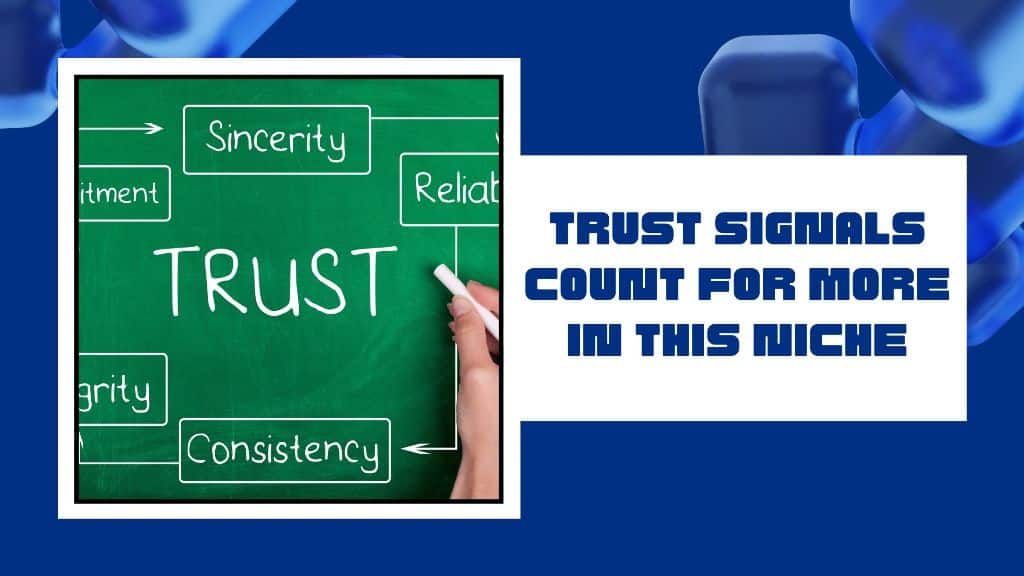
Adult search sits in territory where Google is extra careful, so credibility infrastructure carries real weight. Audit for a clear 18 USC 2257 compliance statement, a documented removal and takedown process, consent and verification policies for uploaded material, visible ownership details, editorial bylines with real credentials, and a contact page anyone can find in five seconds.
None of these pages will rank on their own. Their absence still caps how far any Google core update recovery effort can take you.
Clear the technical and UX debt

Core updates do not measure technical health directly. Poor experience does suppress engagement, though, and engagement feeds the systems that do the ranking. Technical debt will not sink you by itself, but it slows every other Google core update recovery task you ship.
Check Core Web Vitals on real mobile devices rather than lab scores, because video players and gallery scripts are almost always the culprit. Look hard at whatever blocks content on entry. Age gates are non-negotiable, but they should load fast and never stack with three ad layers on top. Deal with index bloat from faceted URLs, sort parameters, and paginated archives, which canonicals and parameter rules usually solve. Check internal linking depth too, since a page five clicks deep reads as unimportant to Google and to users. And watch server response under load, especially on CDN-heavy media libraries.
Audit links, but do not panic about them

Link cleanup rarely drives Google core update recovery on its own, though a genuinely toxic profile can hold you flat, so it is worth a look. Check for paid link networks, sitewide footer links from unrelated properties, and expired-domain redirects pointed at your money pages. Disavow only what you know is manipulative and yours, then leave the rest alone. Meanwhile, keep earning coverage from industry publications, review sites, and creator communities. Relevance beats volume here every time.
How long this actually takes
Set expectations early, ideally before anyone promises a board meeting anything. Sites that fix the underlying issues usually see movement at the next broad core update, which historically lands every two to four months. Partial improvement shows up sooner as Google recrawls individual pages. A full Google core update recovery is almost never a two-week story, whatever the case study you read last night claimed.
What speeds it up is unglamorous: fixing causes instead of symptoms, and shipping in batches big enough that a recrawl notices. Publishing through the fix window helps too.
Mistakes that stall progress
Most stalled Google core update recovery projects fail the same five ways. Rewriting the whole site at once is the big one, because it destroys any ability to attribute a gain to anything you did. Chasing algorithm theories off forums comes second. Adding more content to a site already drowning in thin content is somehow still common. Migrating domains to escape a drop does not work either, since the evaluation follows the content wherever you put it. And stripping every ad in a panic costs revenue without buying back rankings.
A workable 90-day plan
- Weeks 1 and 2: confirm the cause, segment the losses, build a prioritised URL list.
- Weeks 3 to 6: prune and consolidate dead pages, fix compliance and trust pages, clear the technical issues blocking everything else.
- Weeks 7 to 10: rewrite and enrich your highest-value losers, add first-hand detail, tighten internal links.
- Weeks 11 and 12: measure by segment, request indexing on updated URLs, and write down what changed so the next update tells you something useful.
Treat Google core update recovery as an operating standard rather than a one-off project. Sites that keep their content useful and their compliance visible tend to gain during updates instead of bracing for them.
Two questions clients always ask
Can we recover without removing pages? Sometimes, if the site is small and the problem is depth rather than volume. On a large adult site with tens of thousands of auto-generated URLs, pruning is unavoidable. Quality gets judged across the whole domain, not page by page in isolation.
Should we pause publishing during Google core update recovery? No. Pause the low-value publishing, not all of it. Sites that keep shipping useful pages recover faster than the ones that go quiet for six months waiting for good news.
Ready to stop guessing? Talk to our adult SEO team for a full core update audit and a recovery roadmap built for your site.